GADARA / KEDEM GUIDE
Umm Qais
Umm Qais · Gadara
Umm Qais is securely identified as ancient Gadara, but the exact site of the exorcism remains debated. The guide also notes the Gospel manuscript variants.
Travel and visit times are estimates. Check access and opening arrangements before travel.
Mark 5:1–20 (Decapolis context)
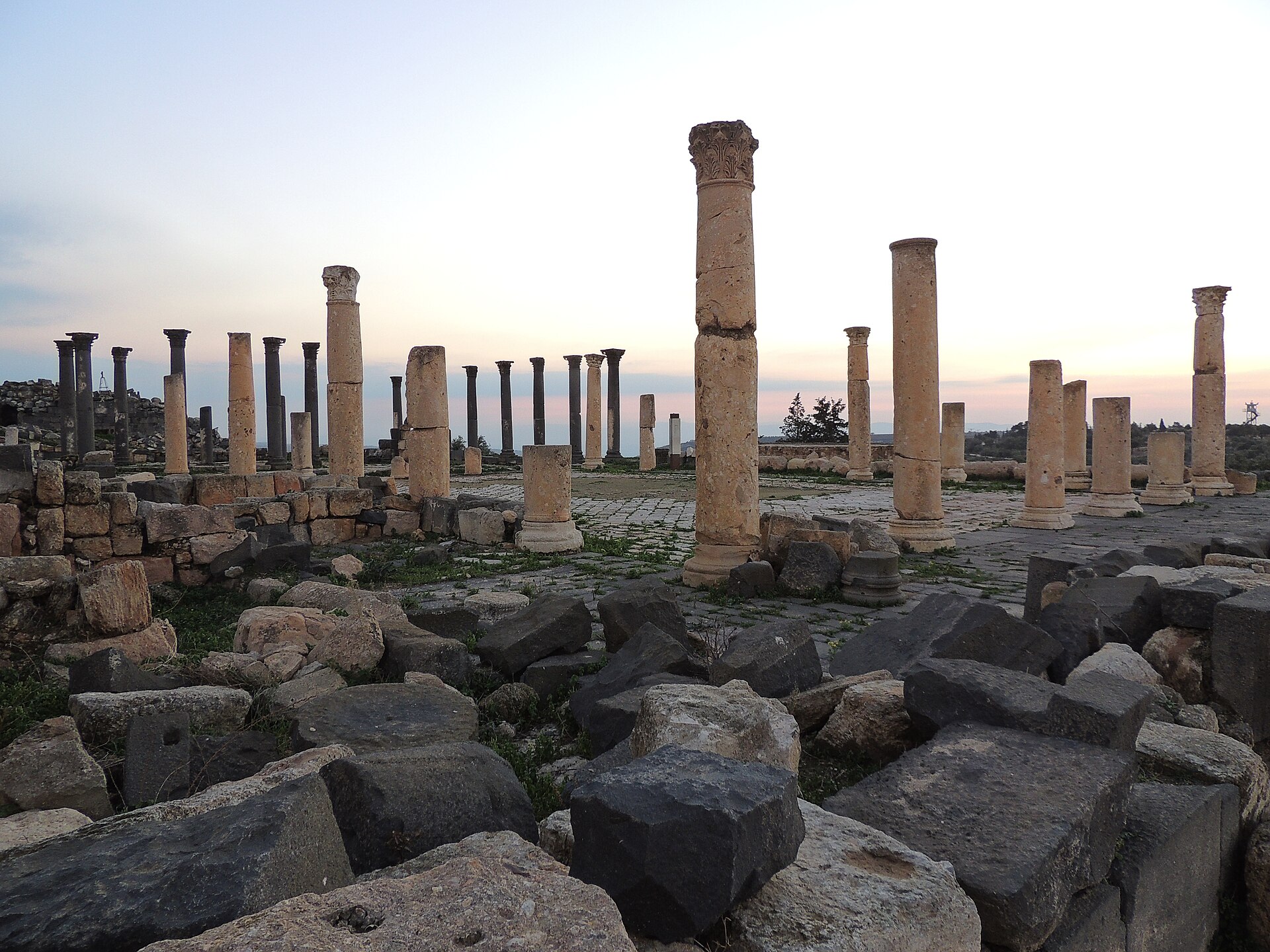
Umm Qais occupies a hill in Jordan's far northwest at the ruins of ancient Gadara, a city of the Roman Decapolis. Beyond its black-basalt theatre and colonnaded street, views open across the Yarmouk Valley toward the Sea of Galilee and the Golan Heights.
Biblical context
Mark 5:1–20 records Jesus restoring a demon-possessed man across the lake, after which the man proclaimed what had happened in the Decapolis. Manuscripts and Gospel parallels vary between Gerasenes, Gadarenes, and Gergesenes. Umm Qais is ancient Gadara, but the hill itself should not be claimed as the certain scene of the event.
History and tradition
Gadara developed from the Hellenistic era into a Roman Decapolis city known for philosophy and poetry. Roman theatres, a basilica, shops, and an Ottoman village overlap at the site, with a striking contrast between black basalt and pale limestone.
Pilgrim reflection
The restored man was sent back to his own community to tell what had happened. Consider how you might speak honestly to those nearest to you about the grace you have received.
On-site notes
Most of the site is outdoors with limited shade. Northern highlands can be cold and windy in winter, so carry a layer. On a clear day the views are exceptional; Umm Qais also combines well with Jerash and Ajloun.
What to bring
Comfortable walking shoes, water, a hat and sunscreen, a windproof or winter layer, and optional binoculars for the views.